- TheoTrade (FOMO)
- Posts
- Here's Why The Market Won't Recover When The War Ends.
Here's Why The Market Won't Recover When The War Ends.
The retail call-buying that powered two years of tech breakouts has vanished.

Don Kaufman
April 07, 2026

The NASDAQ was already in decline in February. There was no war then.
I want to say that one more time because it is getting lost in all the Iran headlines.
The NASDAQ started rolling over before the first shot was fired. Microsoft was putting pressure on the index before any geopolitical event kicked off. The conflict is a factor. It is not the factor.
And if the conflict ends tomorrow and the NASDAQ does not recover, you will understand why I kept saying it.
The market has a structural problem that nobody is talking about directly. Here it is.
What drove the breakouts in tech stocks over the last two years? Retail traders buying calls. When individual investors pile into call options on a stock, it forces market makers to buy the actual shares to hedge, and that mechanical buying pushes prices higher.
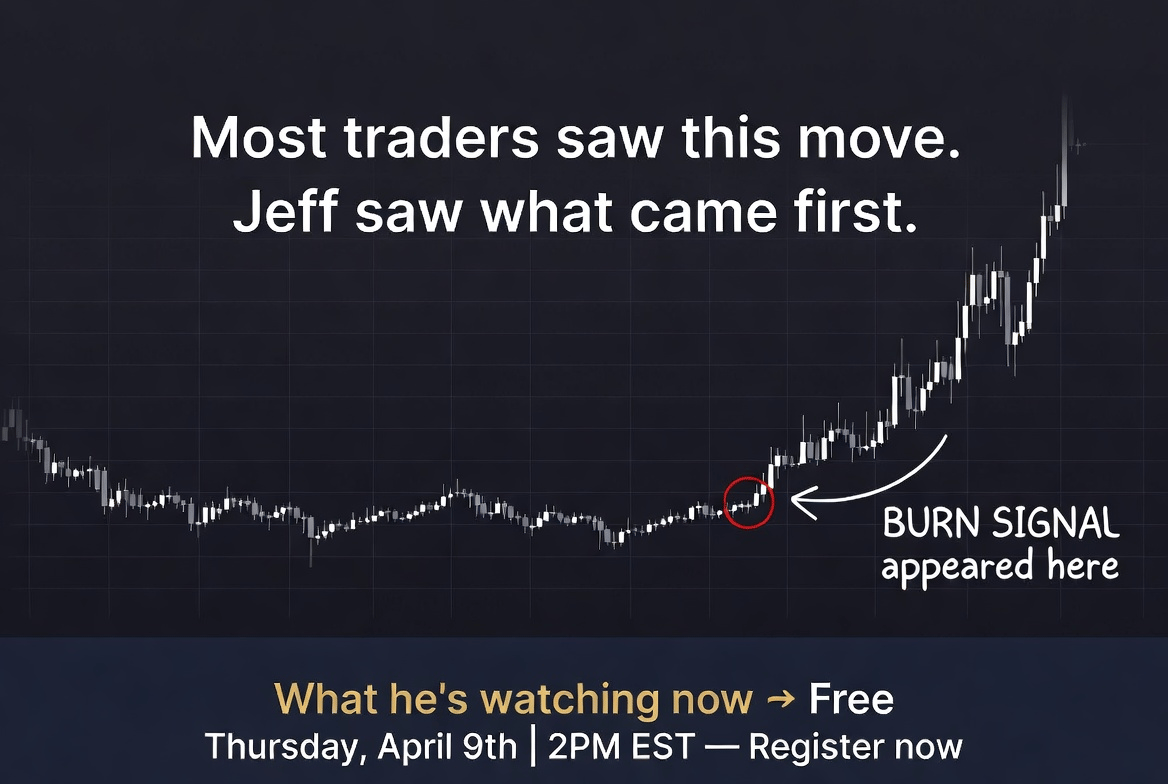
It became a self-reinforcing loop. ARM, Nvidia, the whole list, they ran because the retail bid was relentless.
That bid is gone.
ARM is stuck in a channel it cannot escape. Technically it wants to go to $100. But the real reason it cannot break out is not the chart. It is that nobody is out there buying calls with any conviction.
The retail energy that powered these names has quietly disappeared, and the stocks are starting to show it.
Now layer on what oil is doing to the Fed's hands.
The Federal Reserve has what is called a dual mandate. It is legally required to pursue two goals simultaneously: maximum employment and stable prices.
Those two goals are currently pointing in opposite directions. Oil near $116 is inflationary. Inflation is already here. The only way the Fed gets to cut rates is if the labor market weakens badly enough to bring demand down. Mass layoffs. Not a rounding error.
The kind that moves the unemployment rate.
So you can sit there and parse every headline about Trump's deadline. Or you can look at the expected move.
The expected move is the number the options market prices in for how far the S&P will travel in a given period. It does not care about deadlines or press conferences.
It is the market's own mathematical read on its behavior, built from actual trades.
This week the S&P has a $167 expected move. That is the range. Everything else is noise.
For more insight, come trade with me tomorrow morning.
To your success,
Don Kaufman